Blogs
Insightful discussions on building better culture
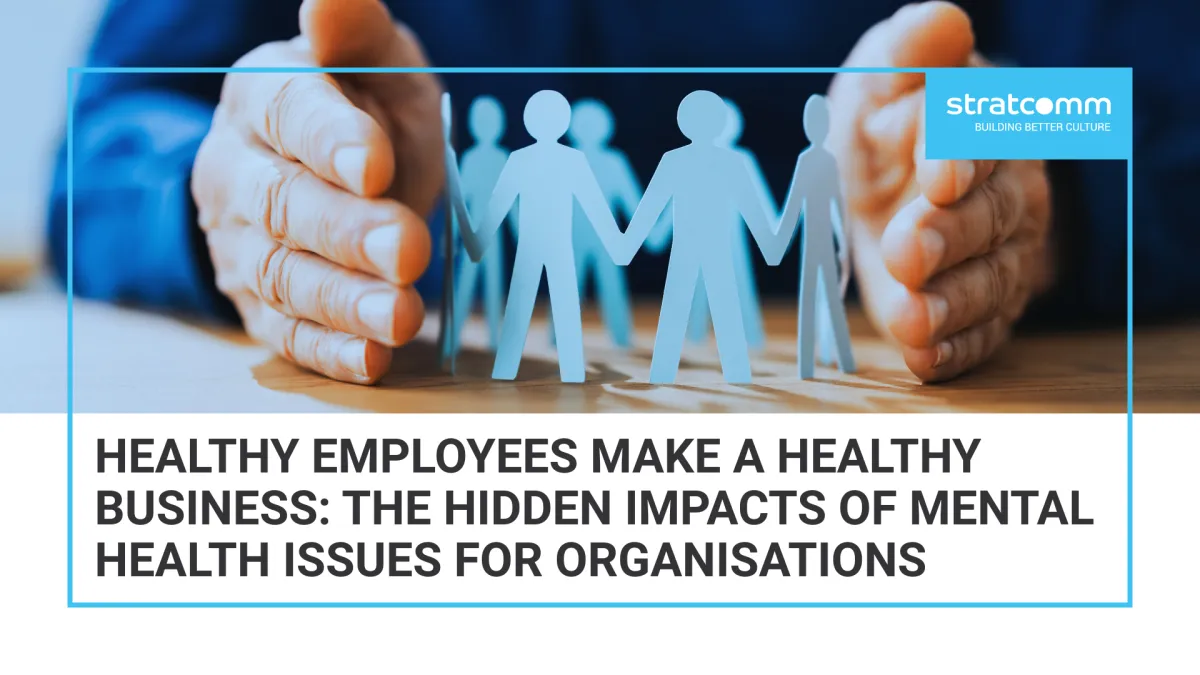
Healthy Employees Make a Healthy Business: The Hidden Impacts of Mental Health Issues for Organisations
Mental health is no longer a side conversation in organisational life. It is part of how workplaces function, how people perform, how leaders communicate and how cultures either strengthen or decline.
For many years, workplace mental health was treated as a private matter that sat largely with the individual. If someone was struggling, the assumption was often that they needed to seek support outside work, manage their own stress better or return when they were well enough to perform. While personal support remains important, this view is no longer enough.
Workplaces influence mental health. They influence stress, recovery, connection, belonging, workload, role clarity, confidence and psychological safety. The way work is designed, managed and communicated can either protect people or expose them to harm.
This does not mean organisations are responsible for every aspect of an employee’s life or health. It does mean they have a responsibility to understand the workplace factors that affect wellbeing and to manage psychosocial risks as seriously as they manage physical risks.
The business case is clear, but the human case is even clearer. Healthy employees are more likely to be present, engaged, constructive and able to contribute. When people are overwhelmed, unsupported or psychologically unsafe, the impact is rarely contained to one person. It can move through a team, affecting communication, trust, workload, conflict, morale and performance.
This is why mental health and culture cannot be separated.
Culture is more than the values written on a website or printed in a strategy document. It is the collective pattern of thinking, behaviour, communication and decision making that people experience every day. It is shaped by how people speak to one another, how leaders respond to concerns, how pressure is managed and whether employees feel able to raise issues before they become crises.
When culture is healthy, people are more likely to speak early, seek support, ask questions and participate in solutions. When culture is unhealthy, people may withdraw, mask their distress, avoid difficult conversations or continue working while unwell.
This is where the hidden impact of mental health becomes visible.
Absenteeism is easier to see because it shows up in leave records. Presenteeism is harder to measure. It occurs when people are physically at work but not fully able to contribute because of stress, exhaustion, anxiety, low mood, disengagement or overwhelm. The person may still attend meetings, reply to emails and complete tasks, but their energy, clarity and connection are reduced.
Over time, presenteeism can become one of the quietest and most costly cultural issues inside an organisation. It affects decision making, customer service, safety, innovation, collaboration and the quality of relationships. It can also place additional strain on colleagues, particularly when teams are already under pressure.
Managers often find themselves caught in the middle. They may notice that someone is struggling but feel unsure about what to say. They may worry about invading privacy or making the situation worse. They may need to manage performance issues while also being sensitive to health concerns. They may be trying to balance workloads across the team, protect confidentiality and prevent resentment from building when other employees feel they are carrying more.
These are difficult situations, and they cannot be handled well by avoidance.
Avoidance often creates more risk. When concerns are not addressed early, employees can become more isolated, managers can become more anxious and teams can begin to fill the gaps with their own assumptions. Gossip, frustration and blame can appear when people do not understand what is happening or do not trust that issues are being managed fairly.
The answer is not for managers to become counsellors. The answer is for organisations to equip leaders with the confidence, clarity and support to have respectful conversations, manage work appropriately and know when to refer employees to the right support.
This begins with a more mature understanding of mental health at work.
Bringing our best to work does not mean being perfect. It does not mean being cheerful every day or unaffected by pressure. It means being supported to show up with enough health, clarity and capacity to contribute. It also means being part of a culture where people can raise concerns, reflect on their own impact and participate in creating a healthier workplace.
At Stratcomm, we believe employees are one of an organisation’s greatest assets because they know what works, where the gaps are and what gets in the way of better outcomes. When organisations create genuine pathways for employees to contribute, they gain access to insight that can improve both wellbeing and performance.
This is the foundation of Inspired Engagement.
Inspired Engagement recognises that individuals need opportunities to develop insight, take action and expand outcomes. Organisations need to reflect, respond and integrate feedback if they want to create sustainable change. This is especially important when addressing workplace mental health because the issues are rarely isolated. They are often connected to workload, leadership, communication, role clarity, team dynamics, change fatigue and trust.
A mentally healthy workplace is not created by a wellness poster or a one-off awareness campaign. Those things can be useful, but they are not enough. A healthier workplace is built through consistent actions that make it easier for people to do good work without unnecessary harm.
That includes designing work in a way that is reasonable and clear. It includes ensuring people understand their roles and responsibilities. It includes giving employees appropriate control over how they work where possible. It includes respectful leadership, early intervention, manageable workloads, genuine consultation and timely communication during change.
It also includes the individual practices that help people maintain resilience across the physical, emotional, social and cognitive dimensions of life.
Most people already know the basics. Sleep matters. Movement matters. Nutrition matters. Social connection matters. Time for reflection matters. Accessing support matters. The challenge is not usually lack of knowledge. The challenge is the everyday reality of life: logistics, interruptions, frustrations and excuses. People are busy. Workloads are high. Personal responsibilities are real. It can be easy to keep pushing wellbeing aside until stress becomes the loudest voice in the room.
This is why organisations need to make wellbeing practical, not performative.
Practical wellbeing asks different questions. Are people able to recover from pressure, or is high demand treated as normal indefinitely? Are employees encouraged to speak honestly, or do they learn to stay silent? Are managers equipped to respond well to mental health concerns, or are they left to guess? Are workloads, systems and communication practices helping people perform, or quietly wearing them down?
These questions move the conversation from individual coping to organisational responsibility.
They also invite employees to reflect on their own contribution. How do I engage with the culture of my team? Do I contribute to openness or avoidance? Do I communicate for outcomes or from frustration? Do I seek support when I need it, or do I hide out and hope the difficult period will pass? Do I invest in the relationships that help me stay connected and well?
Culture is created by all of us, but it must be enabled by the organisation.
Leaders carry a particular responsibility because their behaviour sets the tone for what is safe, acceptable and valued. A leader who responds calmly and respectfully to difficult conversations makes it more likely that people will speak early. A leader who dismisses concerns or treats wellbeing as weakness teaches people to conceal what is really happening. Over time, these patterns shape trust.
The opportunity for organisations is to move beyond awareness and into action.
That action does not need to be complicated, but it does need to be genuine. Start by listening to employees. Identify the workplace factors that are contributing to stress or disengagement. Equip managers to have better conversations. Review workloads and role clarity. Strengthen feedback loops. Respond to what is being raised. Treat mental health as part of culture, safety and performance rather than a separate human resources issue.
The hidden impacts of mental health issues become less hidden when organisations are willing to look closely.
They show up in absenteeism, presenteeism, conflict, low morale, turnover, customer experience, safety incidents, stalled change and the quiet loss of energy in teams that were once more engaged. They also show up in the emotional load carried by managers who are trying to do the right thing without the right support.
A healthy business is not one where everyone is fine all the time. It is one where people are supported, risks are managed, leaders are equipped and feedback is integrated into action.
It is one where employees are treated as people first, not simply as units of output.
When organisations take mental health seriously, they strengthen more than wellbeing. They strengthen trust, culture, resilience and performance. They create the conditions for people to contribute with greater clarity, confidence and purpose.
Healthy employees help make a healthy business, but healthy workplaces do not happen by accident. They are designed, led, listened into and continually improved.